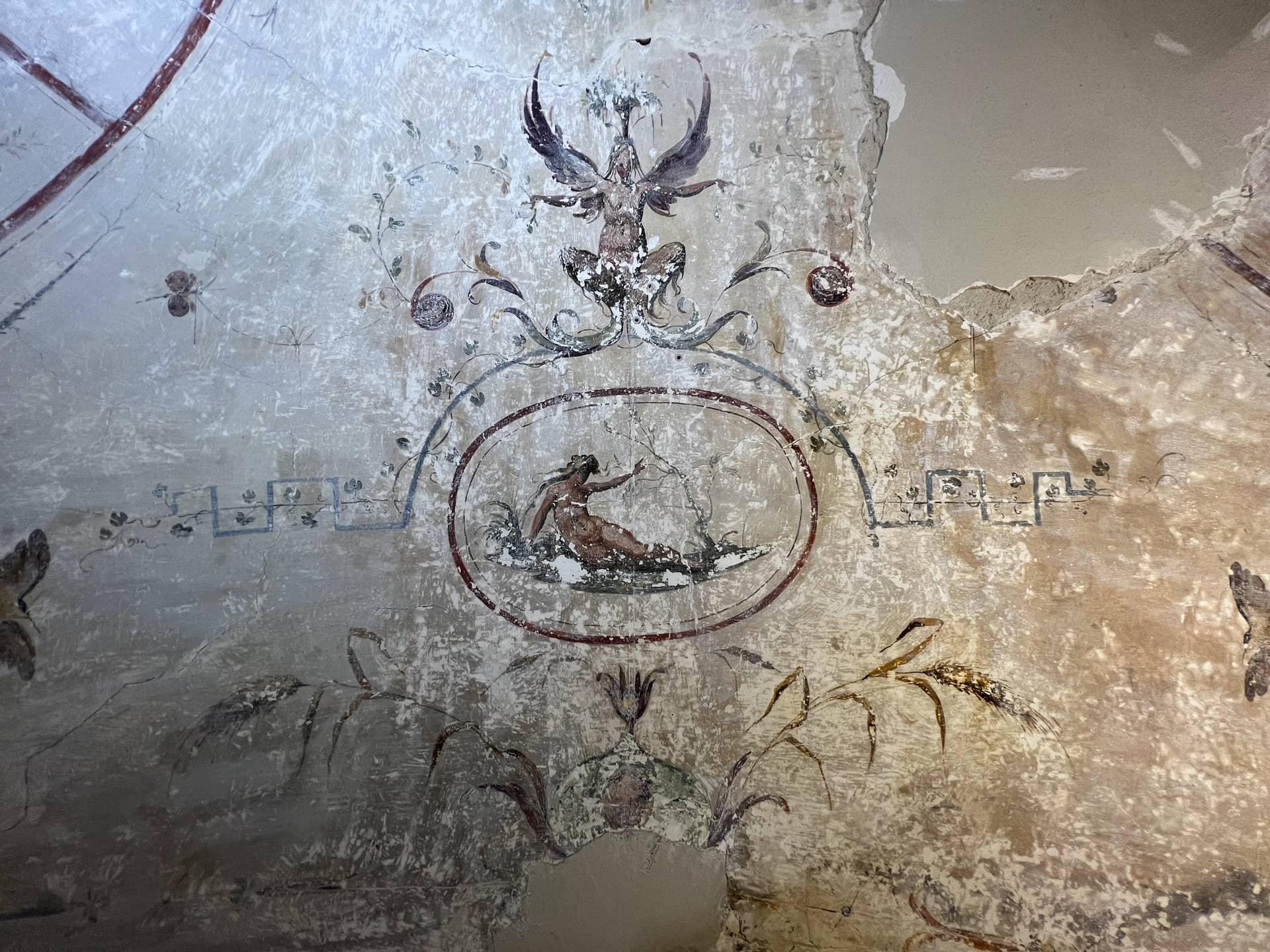
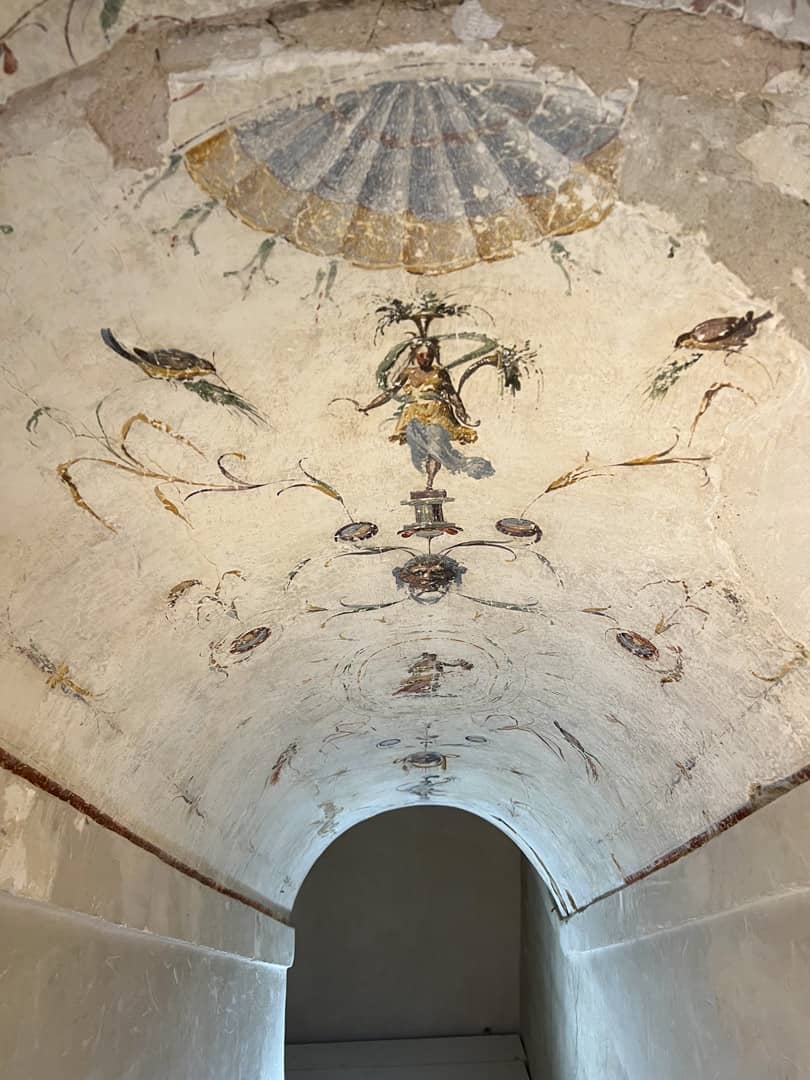
The aim of this intervention was to recover and restore the paintings, in order to restore their legibility and ensure their proper conservation over time.
The methodology followed the principles of conservation, respecting the material and history of the work.
The removal (descialbo) of the 16th-century paintings began in January 2023.
The delicate intervention removed three layers of different paints, which were very adherent to each other and to the original surface.
The layers were removed mechanically, using scalpels and small hammers, and finished with EOS QS laser equipment (in QS mode) where it was not possible to use mechanical means.
Many above-level fillings, carried out in previous interventions, were lowered or removed (those that were no longer suitable).
The detached plaster and fine plaster were consolidated to reattach them to the substrate using mortar injections based on natural lime and aggregates.
The main problem encountered concerned the cleaning of the surface, which appeared very uneven depending on the floor.
Some areas were very blackened where the mineralized protective layer had incorporated and compacted the dirt; others had yellow-brown stains caused by substances that had penetrated the plaster layers.
Cleaning was carried out using chemical-physical means, with different packs depending on the characteristics of the surface, alternating reagents and aqueous solutions.
After cleaning, the surface was consolidated where necessary with nanocalci, due to their compatibility, good yield, and stability.
All the gaps were filled with a mortar of lime putty and sand for the rough coat, and lime putty, marble powder, and pigment (Sienna earth) for the fine coat.
The aesthetic restoration of the pictorial cycle repaired the abrasions in the paintwork with a subtle retouch, using pigments and ammonium caseinate.