

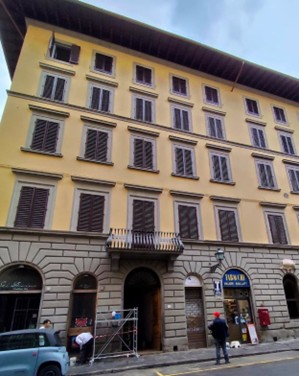
The “Ex Ospedale San Giovanni di Dio” complex
CONSERVATIVE RESTORATION OF THE STONE ELEMENTS OF THE FORMER SAN GIOVANNI DI DIO HOSPITAL FAÇADE

CLIENT:
DIRETTORE DEI LAVORI:
ACTIVITIES CARRIED OUT:
Via del Porcellana Façade
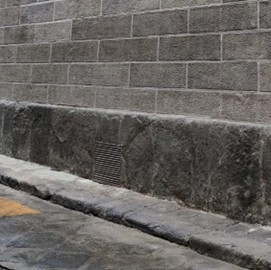
Grey Sandstone (Pietra Serena/Arenaria) Plinth:
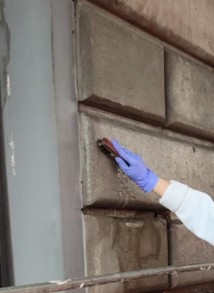
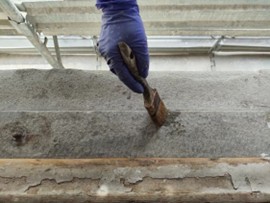
- Removal of loose surface deposits by dusting with soft-bristle brushes.
- Removal of unstable elements.
- Cleaning using low-pressure nebulized water, brushes, and sponges.
- Surface consolidation by brush application of Ethyl Silicate, applied until saturation, dabbing away any excess. For highly degraded areas, the operation was repeated after 15 days.
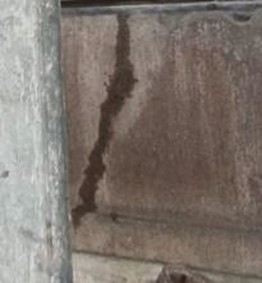
- Grouting of fractures and cracks using lime and aggregates (sand, sandstone dust) in a 1:2 ratio.
- Removal of incompatible cementitious areas and subsequent reconstruction using hydraulic mortar with lime, sand, and micronized grey pozzolana.
- Chromatic integration of grouting and reconstructions using pigments dissolved in acrylic resin.
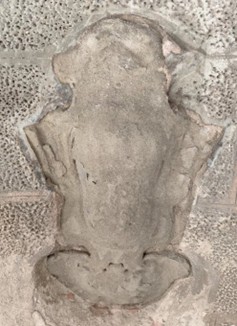
Coat of Arms (Stemma):
- Delicate and controlled surface dusting with soft-bristle brushes.
- Swab cleaning with deionized water.
- Surface consolidation by brush application of Ethyl Silicate until saturation, dabbing away excess. Repeated after 15 days for highly degraded areas.
Windowsills and Stringcourse (Fascia marcapiano):
- Removal of loose surface deposits by dusting with soft-bristle brushes.
- Removal of unstable elements.
- Cleaning with low-pressure nebulized water, brushes, and sponges.
- Cleaning via poultice with paper pulp (Arbocel BW40), absorbent clay (Sepiolite), and a 15% ammonium carbonate solution for 24 hours to remove hydrocarbon patinas and swell old protective coatings; subsequently removed with water, sponges, and small brushes.
- Surface consolidation with Ethyl Silicate, applied until saturation.
- Grouting of fractures and cracks using lime and aggregates.
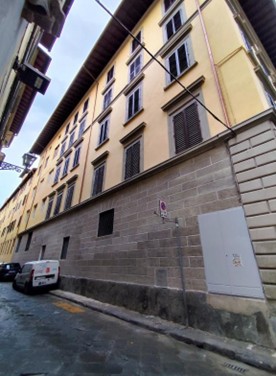
Via Ognissanti Façade
Basal Band and Base Molding:
- Removal of loose surface deposits by dusting with soft-bristle brushes.
- Removal of unstable elements.
- Cleaning with low-pressure nebulized water, brushes, and sponges.
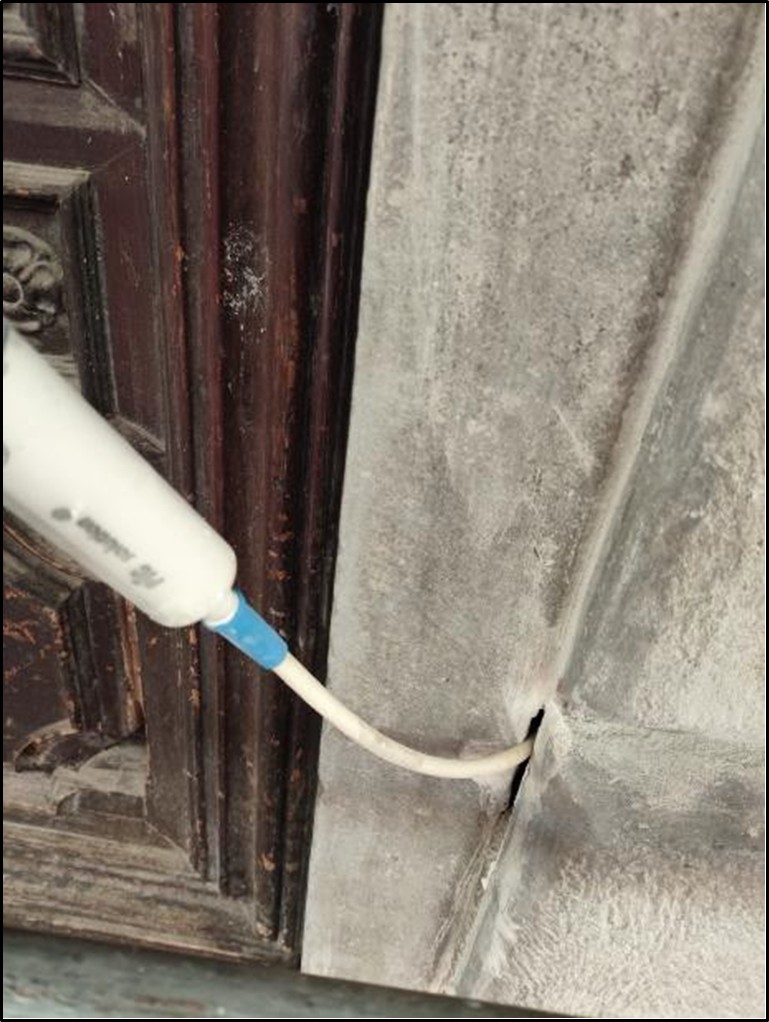
- Structural consolidation via injections of PLM (injection mortar based on natural lime, free of efflorescent salts, with selected aggregates and rheological modifiers).
- Surface consolidation by brush application of Ethyl Silicate until saturation. Repeated after 15 days for degraded areas.
- Grouting of fractures and cracks with lime and aggregates (1:2 ratio).
- Reconstruction using hydraulic mortar with lime, sand, and micronized grey pozzolana.
- Chromatic integration using pigments dissolved in acrylic resins.
Windowsills and Stringcourse:
- Removal of loose surface deposits, unstable elements, and nebulized water cleaning.
- Cleaning via poultice (Arbocel BW40, Sepiolite, and 15% ammonium carbonate) for 24 hours, then rinsed with water, sponges, and brushes.
- Surface consolidation with Ethyl Silicate until saturation.
- Grouting of fractures and cracks with lime and aggregates (1:2 ratio).
Openings:
- Removal of loose surface deposits and low-pressure nebulized water cleaning.
- Poultice cleaning (Ammonium Carbonate 15%) for 24 hours to remove hydrocarbon patinas, followed by rinsing.
- Surface consolidation with Ethyl Silicate until saturation.
- Grouting of fractures and cracks (1:2 ratio) and chromatic integration using pigments in acrylic resins.
Balcony Brackets (Left and Right):
- Removal of loose deposits and nebulized water cleaning.
- Cleaning via poultice (Arbocel BW40, Sepiolite, and 15% ammonium carbonate) for 24 hours, followed by rinsing.
Coats of Arms (Stemmi):
- Delicate and controlled surface dusting.
- Swab cleaning with acetone to remove layers of varnish applied during previous maintenance.
- Surface consolidation with Ethyl Silicate until saturation.
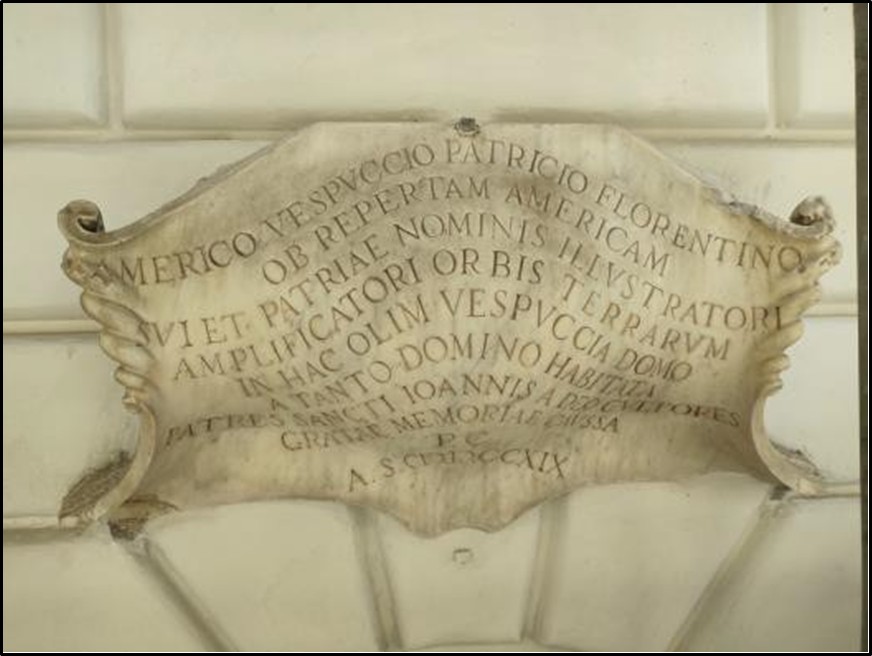
Scroll (Cartiglio):
- Controlled surface dusting and swab cleaning with deionized water.
- Localized cleaning via poultice (Arbocel BW40, Sepiolite, and 15% ammonium carbonate) for 24 hours to remove black crusts.
- Localized swab cleaning with a saturated solution of ammonium carbonate.
- Chromatic restoration of the inscription using natural pigments and acrylic resins to restore readability to the red-lettering (rubricatura).
SOGGETTO:
The former San Giovanni di Dio Hospital, located in Borgo Ognissanti in Florence, is a significant testament to the city's architectural and healthcare history. Dating back to the 15th century, the structure has been renovated and modified multiple times over the centuries, adapting to new functional requirements and the historical events of Florence. Originally a hospital founded by the Hospitaller Brothers of Saint John of God, the building underwent various transformations following the suppression of religious orders and the evolution of hospital functions.
STATE OF CONSERVATION:
The building’s façades showed widespread degradation of the various stone elements, which exhibited signs of aging and damage.
Via del Porcellana Façade
Grey sandstone plinth (at sidewalk level) with concrete reconstructions: extremely degraded, with coherent and incoherent surface deposits, surface disintegration, scaling, and salt efflorescence.
Sandstone coat of arms: extremely degraded, surface deposits, disintegration, pulverization, and erosion with consequent loss of the original modeling.
Windowsills and stringcourse in grey sandstone: deteriorated, with coherent and incoherent surface deposits, cracking, fractures, and detachments.
Via Ognissanti Façade
Ashlar basal band and sandstone plinth: coherent and incoherent surface deposits, surface disintegration, cracks, and detachments.
Openings bordered in “pietra forte,” marble coats of arms and scroll, balcony brackets and windowsills: deteriorated, with coherent and incoherent surface deposits, cracks, fractures, and missing parts.
Windowsills and stringcourse in grey sandstone: deteriorated, with coherent and incoherent surface deposits, cracks, fractures, and detachments.