

ARCISPEDALE DI SANTA MARIA NUOVA FIRENZE
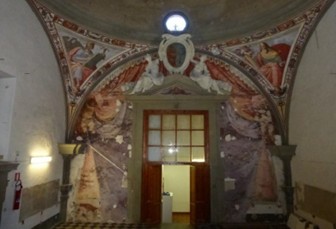
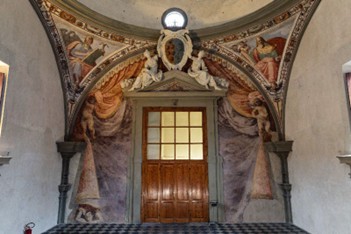
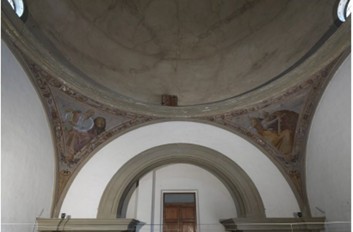
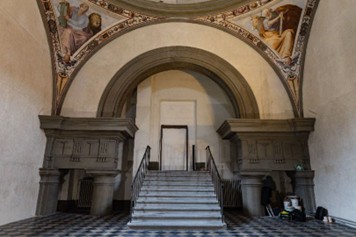
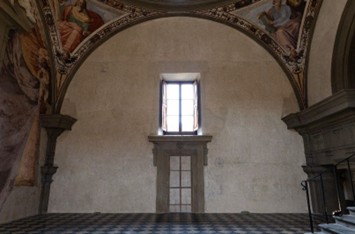
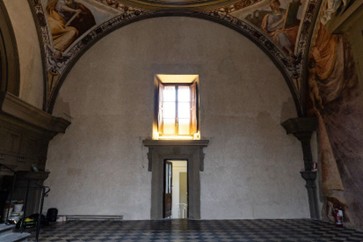
Restoration and Valorization of the Stone Elements and Surfaces of the Buontalenti Chapel
CLIENT:
Azienda Sanitaria Toscana centro-Firenze
DIRETTORE DEI LAVORI:
Arch. Alessandra Lenti
ACTIVITIES CARRIED OUT:
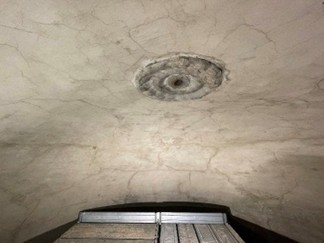
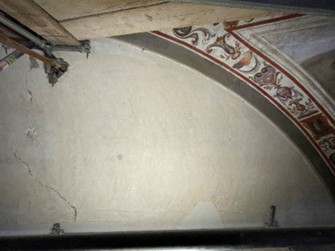
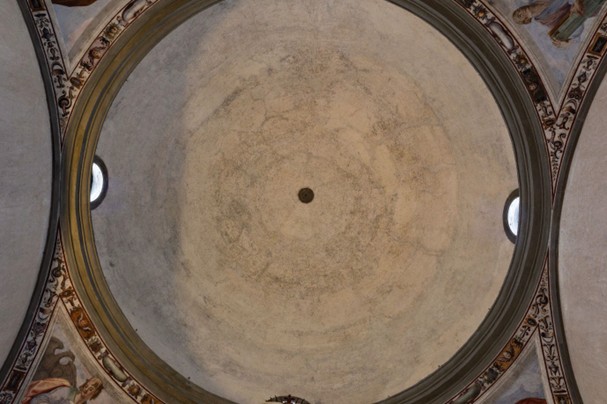
To reveal the continuous painting within the intrados of the Buontalenti Dome, a careful uncovering operation (descialbo) of the overlying paint layers will be performed. This involves softening the layers with neutral cellulose pulp poultices, followed by the use of suitable scalpels and scrapers until the original painting is exposed. In sections where decorations are covered by plaster, removal will be carried out manually with a “martellina” (small hammer) after consolidating any loose pictorial plaster. Temporary “scarpa” grouting will be applied, followed by the dry removal of residual whitewash using scalpels or ultrasonic equipment.
- Cleaning: Removal of deposited solid particles using natural sponges soaked in deionized water.
- Desulfation: Application of a layer of Japanese paper (suitable weight) to the painted surface, followed by the brush application of ion-exchange resins with a desulfating effect. If necessary, ammonium carbonate will be added in a 3% to 8% solution to eliminate whitish patinas.
- Treatment of Carbonate Salts: Should carbonate salts be present, cationic exchange resins mixed with Sepiolite or Arbocel BWW40 will be used. Contact times will be determined through preliminary testing to ensure an appropriate pH level.
- Removal: Ion-exchange resins will be removed using natural sponges or common cotton wool soaked in deionized water.
- Consolidation: Consolidation of plaster showing significant detachment from the support via injections of a salt-free mineral hydraulic mortar; subsequent re-adhesion using small wooden props until the completion of the hydrolysis process.
- Grouting: Filling of lesions and lacunae (losses) in the paintings with lime putty and sand of suitable grain size. Pockmarks (martellinature) on the rediscovered wall finish (intonachino) will be grouted and then integrated with a lime wash to match the original finish.
- Pictorial Integration: Integration of numerous micro-losses using multiple glazes (velature) matched to the original colors, based on pure natural pigments (earths and oxides) diluted with ammonium caseinate to achieve a unified chromatic value. Alternatively, the chromatic selection (selezione cromatica) method may be employed as directed by the Works Management (D.L.).
- Field Integration: Rediscovered surfaces without decorations or ornamental motifs will be cleaned via poultices and integrated with glazes identical to the original, based on natural pigments and oxides bound with ammonium caseinate.