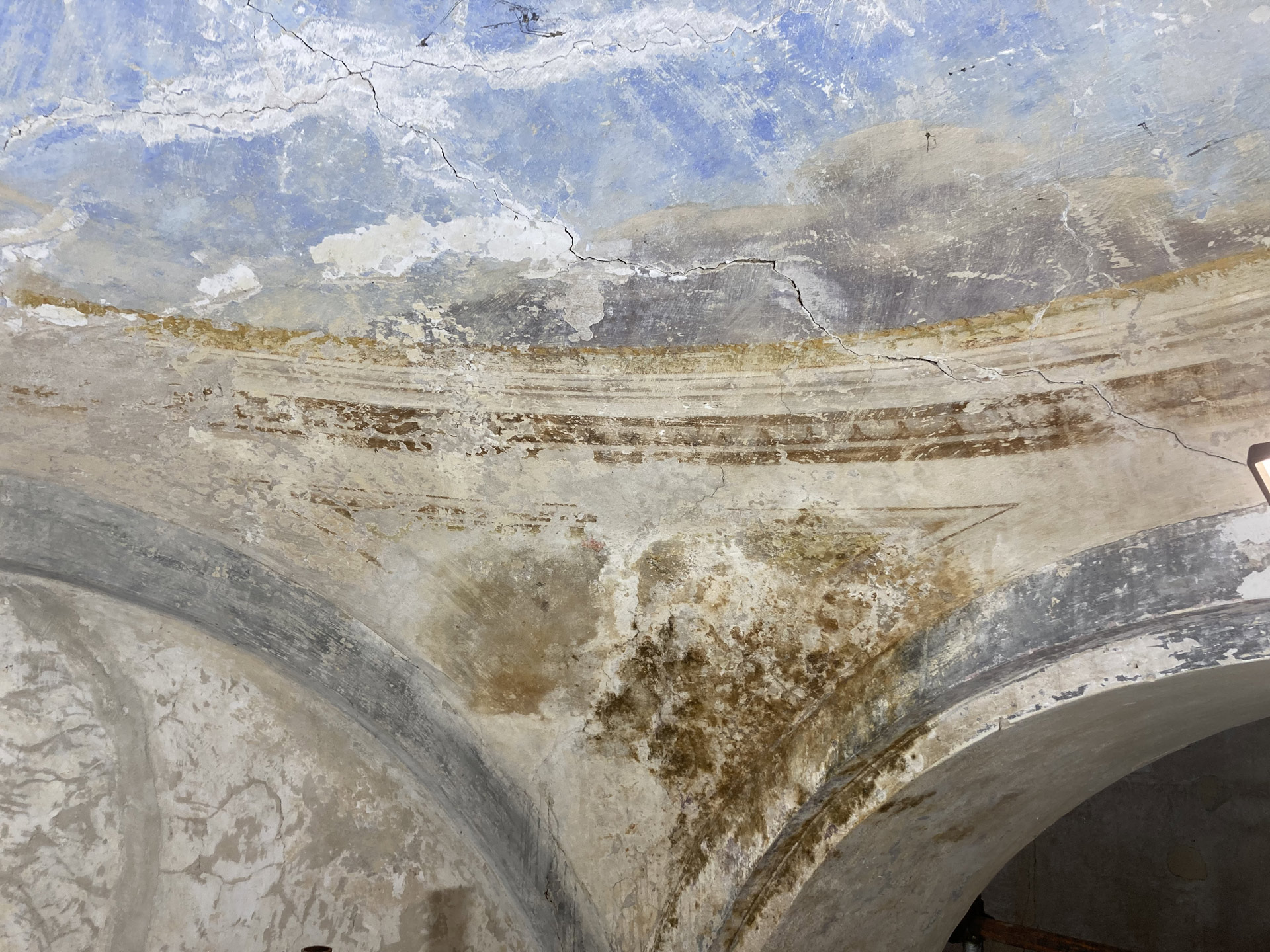
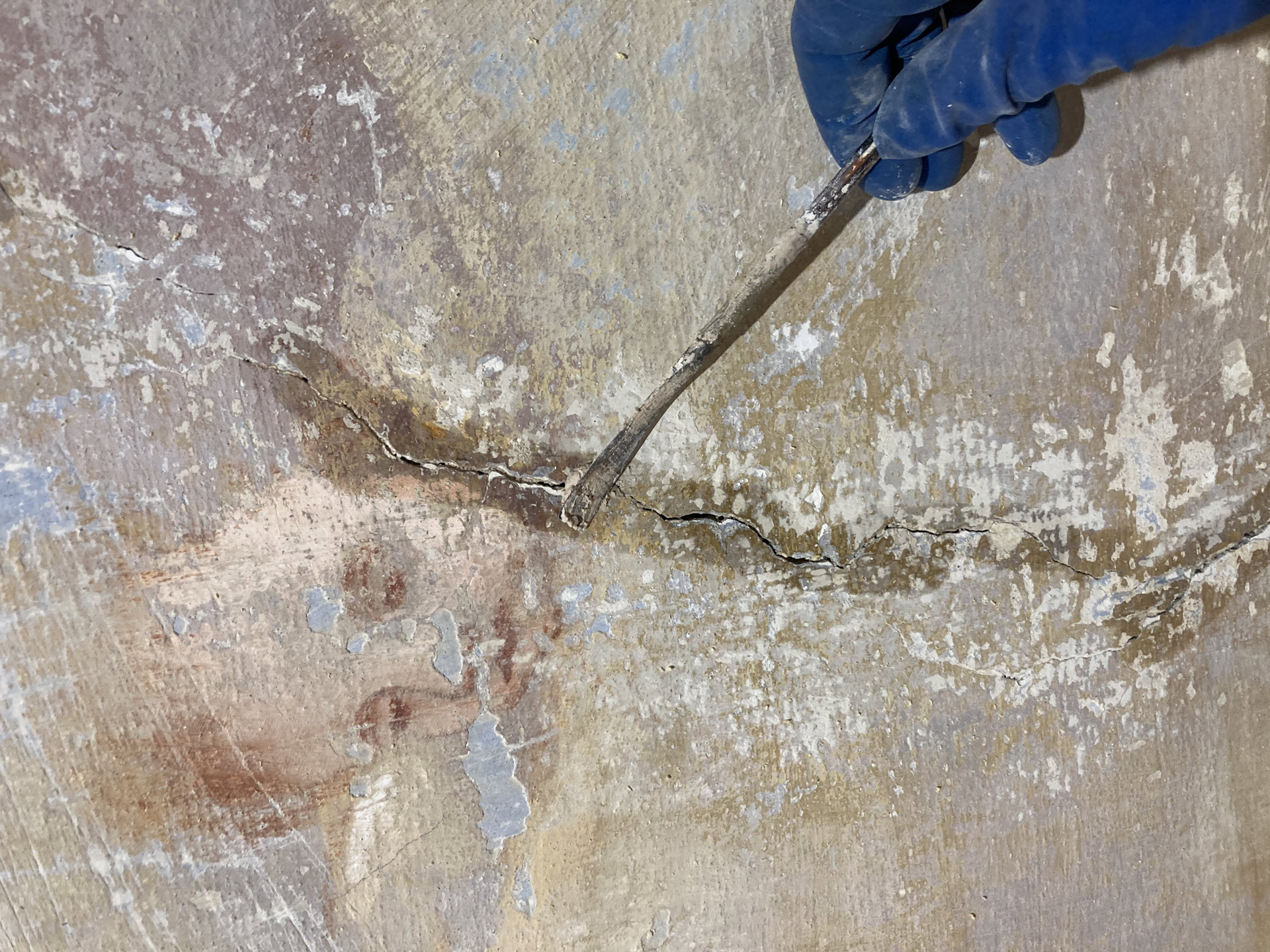
The wall paintings were restored using the following methods:
– Pre-consolidation and preventive lining of the frescoed surface where the paint film had detached from the underlying plaster. This was done by: applying Japanese paper to the painted surface with a soft brush dipped in demineralized water to prevent the color from falling off and facilitate its reattachment to the original support; injection of calcium caseinate adhesive using syringes behind the paint film partially close to the wall support; removal of the veiling after the appropriate adhesion time using natural sponges soaked in demineralized water, acetone, and alcohol.
– Deep consolidation of the plaster, which showed noticeable lifting from the support, by injecting a salt-free mineral hydraulic mortar and then reattaching the plaster using small wooden props that were left in place until the hydrolysis process was complete. Injections of PLM consolidating mixture, consisting of hydraulic lime with a low soluble salt content, were carried out at the rear, after vacuuming the powdery material and humidifying it with a low-pressure spray of distilled water.
– Cleaning of the painted surface. The entire surface of the artifact, previously treated and consolidated, was dusted with soft bristle brushes and then the solid particles deposited were removed with natural sponges soaked in deionized water. For more stubborn deposits, stains, and salt efflorescence, a layer of Japanese paper of suitable weight was applied in contact with the painted surface, and ionic ion-exchange resins with a desulfating effect were applied with a brush. In some cases, ammonium carbonate in saturated water solution was added to the ionic mixture. In the areas of the painting containing carbonate salts, absorbent compresses were applied using sepiolite and Arbocel BWW40 and kept in contact with the surface for an appropriate amount of time based on preliminary tests. After the established time had elapsed, the packs were removed using natural sponges or ordinary cotton wool soaked in deionized water.
– Filling of cracks and gaps in the paintings with mortar composed of slaked lime to which sand with a grain size identical to the existing one was added.
– Painting integration of gaps in the paint film was carried out by applying several glazes sensitized to the original colors. In order to obtain a uniform color value, the entire surface was aesthetically revised to create a color connection between the different portions of plaster. The retouching was carried out with watercolors, by applying various glazes in order to achieve chromatic harmony in the painting.
Finally, the undecorated plasterwork was revised by: lightly cleaning the surfaces with deionized water and natural sponges; the removal of recent patches and fillings deemed incongruous; the filling of gaps in the plaster with lime putty and sand; and finally, the application of a white lime glaze over the entire surface to give it chromatic unity.